1984 vs Brave New World: What Dystopias Can Teach Us About Innovation
Understanding the Role of Technology in the dystopian worlds of Orwell & Huxley.
Confession: I was never a fan of science fiction in which technology takes precedence over the human condition. I therefore seek refuge in History where the story takes precedence.
However, I was at a recent book launch of the famous Indian author Amish Tripathi in Bangalore; someone asked him about technology and AI when he mentioned that the world of today is more akin to Brave New World than 1984. I was intrigued.
I therefore decided to study both of these works. I chewed through the books over a week and was left in utter shock at how well both books have aged with extremely relevant questions on our society today.
Are we living in a dystopia? If so, which one?
The Lives of the Authors in Turbulent Times
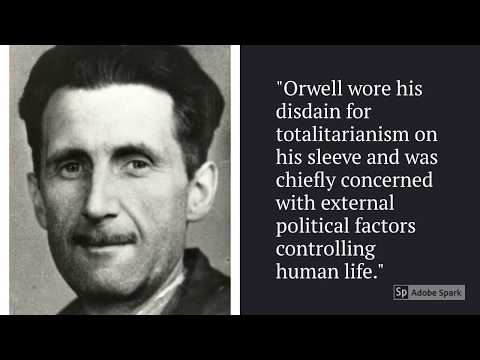
George Orwell was well-traveled, born in Colonial India in 1903, part of the imperial Burmese Police Force, lived in Paris and was wounded in his anti-totalitarian fight in the Spanish Civil War. 1984 was Orwell’s final work, written in an almost monastic solitude on the island of Jura and published in 1949 a few months before his death. Orwell wore his disdain for totalitarianism on his sleeve and was chiefly concerned with external political factors controlling human life.
Huxley, on the other hand, was born at the end of the 19th century. After his maiden visit to the US in 1929, the sheer materialism of America shook him and led to the creation of Brave New World in 1932. He later found his way to California, worked in Hollywood, explored Vedanta, mysticism and even experimented with mescaline. A pacifist at heart, Huxley seemed to be more concerned with the inner world as a source of control.
Dystopian Elements with an Eerie Resemblance to Today
The scariest element of 1984 is the single-minded purpose of technology to establish control over every human life. The most jarring concept for me is without a doubt, Newspeak. Thoughts control words; it can work the other way round.
In Brave New World, undoubtedly the key technical advancement making this world possible is biochemical. Dependence on Soma — ‘with all the benefits of Christianity and alcohol without the side effects’ — is a glaring reflection of the opioid epidemic. The Decanting and Hatcheries, where humans are mass-produced and calibrated to fit roles, are only a few philosophical steps away from CRISPR babies.
Both 1984 and Brave New World keep open the possibility of the dystopias being disrupted by outsiders — proles in the case of 1984 and savages in Brave New World. Nothing underscores the need for Diversity — not just of gender & race but also of thought — in our world more.
Summary
Both books are considered classics for a reason. They ask very relevant and uncomfortable questions on what we as a race are aspiring to become. 1984 and Brave New World are not exclusive realities today; they are both existing simultaneously.
The biggest learning for me personally in innovation has been: the sustainable way to enforce change in the way humans live, for better or for worse, is to make the change desirable.